"The 15-minute habit that helped me take back days from migraine."
A British GP shares how she stopped waiting for the NHS to fix her chronic migraines — and what she now recommends to her own patients.
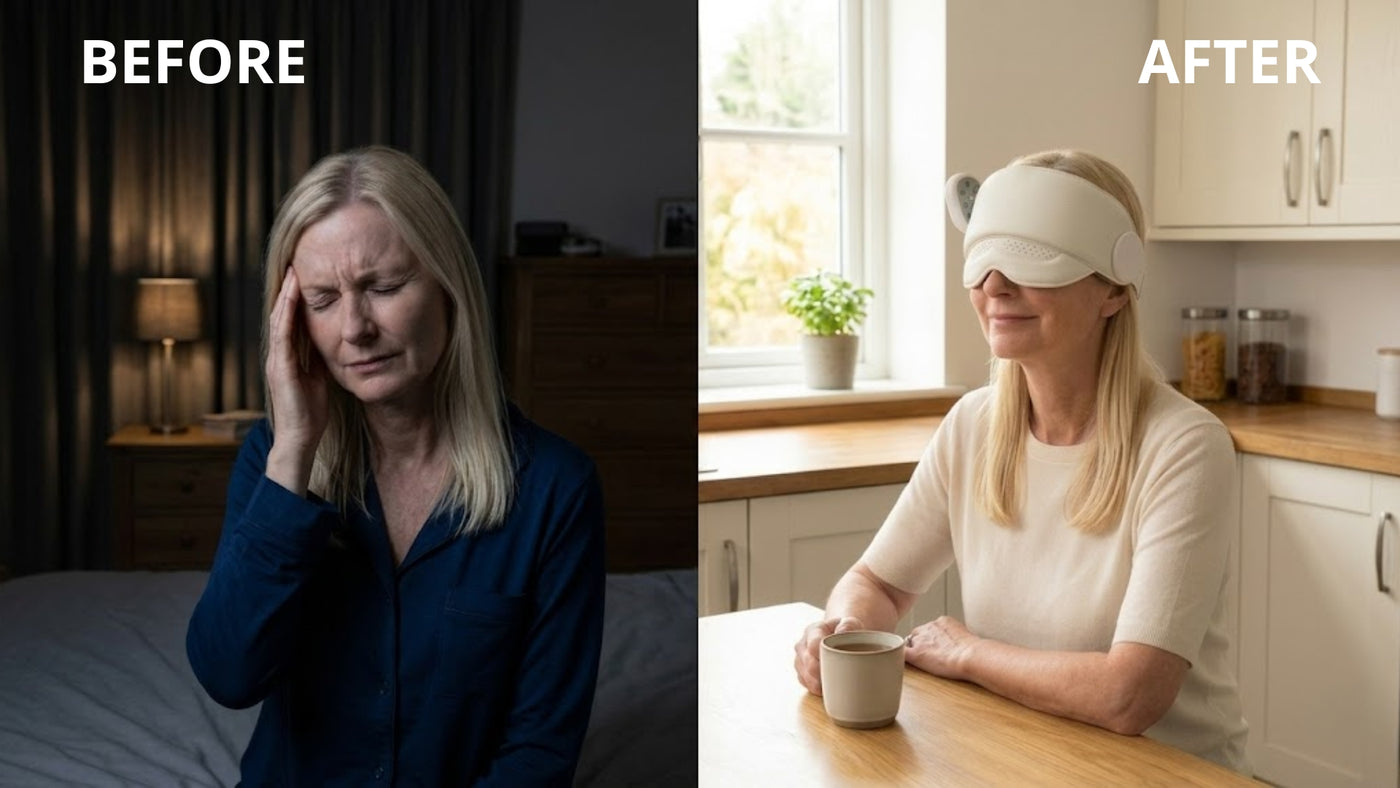
I'm about to say something most of my GP colleagues will quietly disagree with.
Because what I'm about to share could change how thousands of British women manage their migraines.
Without waiting another year for a neurology referral.
But I don't mind the disagreement.
I've spent too long watching women like me lose days, weeks, sometimes months to a condition the NHS can't currently treat fast enough.
After 12 years of chronic hormonal migraines myself…
After two failed prophylactics, three GP changes, and a 14-month wait to see a headache specialist…
After missing my own daughter's school play because I couldn't lift my head off the pillow…
I stopped waiting.
And if you're reading this in a darkened room right now…
Or scrolling on your phone with the brightness on the lowest setting because anything brighter feels like a knife behind your eye…
The next five minutes might be the most useful you've spent in a long while.
My name is Rachel Smith.
I've been an NHS GP for 16 years.
I've worked in surgeries from Manchester to Surrey.
For the last six years I've been a women's-health specialist in a North London practice.
I'm also a migraine patient. Have been since I was 23.
And I want to talk honestly about something almost nobody in my profession says out loud:
The gap between what the NHS can offer migraine sufferers, and what those women actually need.
But first, let me tell you about the morning that changed everything for me.
The morning I stopped waiting
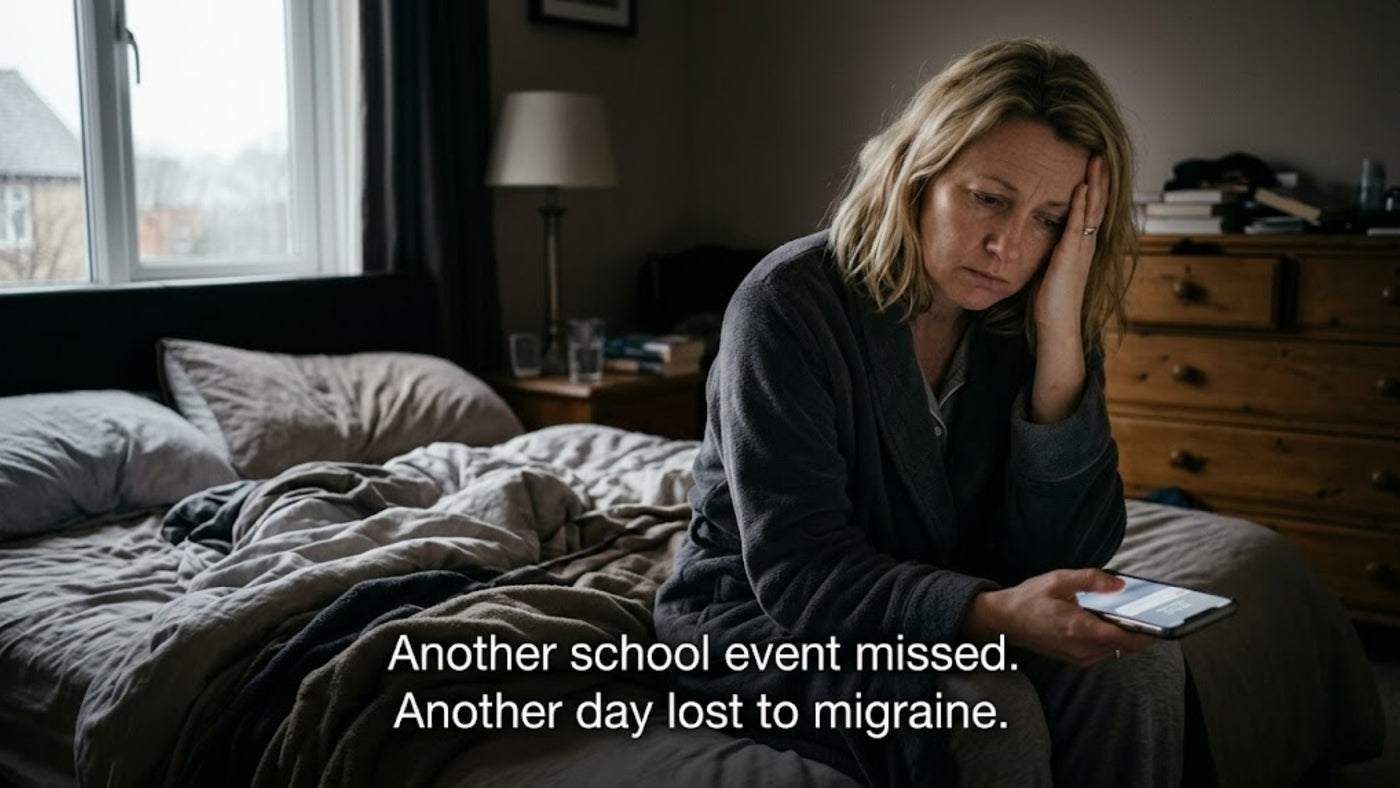
It was a Tuesday in October.
I'd been on the NHS neurology waiting list for nine months.
Nine months of "your referral has been received, we will contact you when an appointment becomes available."
My daughter was eight.
She had her first proper role in the Year 3 nativity.
We'd been practising her line for weeks.
That morning, I woke up at 5:47 AM with the aura already starting.
Zigzag lines in my peripheral vision.
The slight numbness in my left fingers.
The familiar sick taste at the back of my throat.
I knew what was coming.
I had maybe forty minutes before the pain would hit.
And once it hit, I was done for the day.
I took my sumatriptan.
I drank a pint of water.
I lay down with a cold compress.
And I cried.
Not from the pain — the pain hadn't started yet.
From the certainty of what the day was about to take from me.
By 8 AM I'd texted my husband: "Can't do the play. Sorry. Tell her I'll watch the video."
My eight-year-old, who'd practised her one line about a sheep called Algernon, would deliver it to a row that didn't include her mother.
That was the third school event I'd missed that year.
I lay in the dark for six hours.
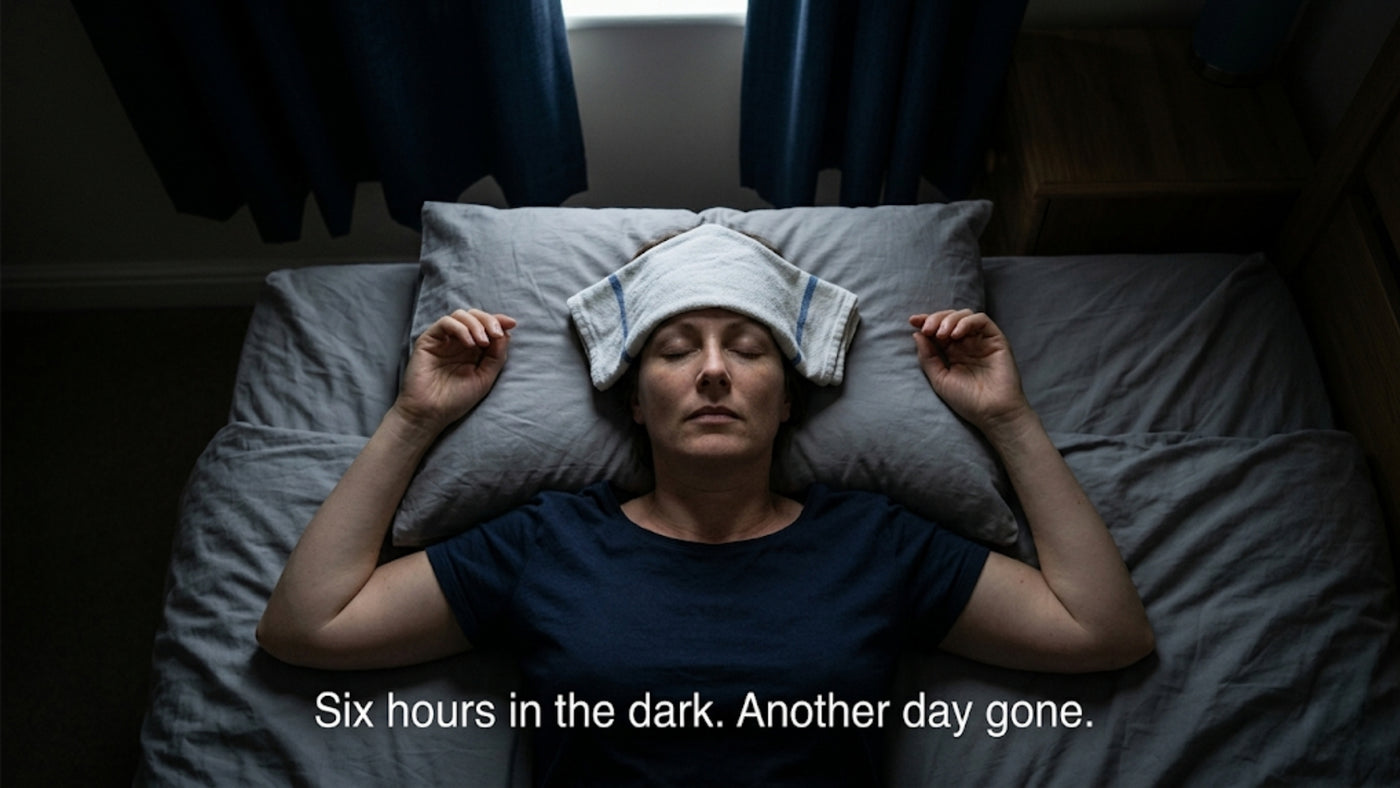
"And somewhere in those six hours, lying still as a stone with a tea towel over my eyes, something in me shifted."
I'm a GP.
I've spent 16 years telling women to "advocate for themselves" with their care.
I've written referral letters.
I've fought NHS bureaucracy on behalf of patients.
I've signed off prescriptions I knew were inadequate because they were the only thing available.
And I was waiting nine months — and counting — for someone else to help me.
What was I actually waiting for?
A 15-minute consultation with a neurologist who would probably suggest a prophylactic I'd already tried.
Or Botox.
Or a CGRP clinic with a six-month waiting list of its own.
The honest answer was:
I was waiting because waiting was the only thing the system had taught me to do.
That night, I started reading.
What I found in the research
For the next four months, I lived in PubMed.
I read every recent paper on non-pharmacological migraine management.
Trigeminal nerve stimulation.
Air-compression therapy.
Photobiomodulation.
The Cochrane reviews. The headache society guidelines from the US, Germany, Japan.
What I found surprised me.
Not because it was hidden.
Because it wasn't being talked about in UK general practice.
There's a body of clinical work going back to the early 2010s on compression-based therapy for migraine pain.
The mechanism is reasonably well understood.
Targeted, rhythmic pressure on specific points of the head and temples — where pain-conducting nerve pathways run closest to the surface of the skull — can interrupt the cascade of pain signalling that drives a migraine attack.
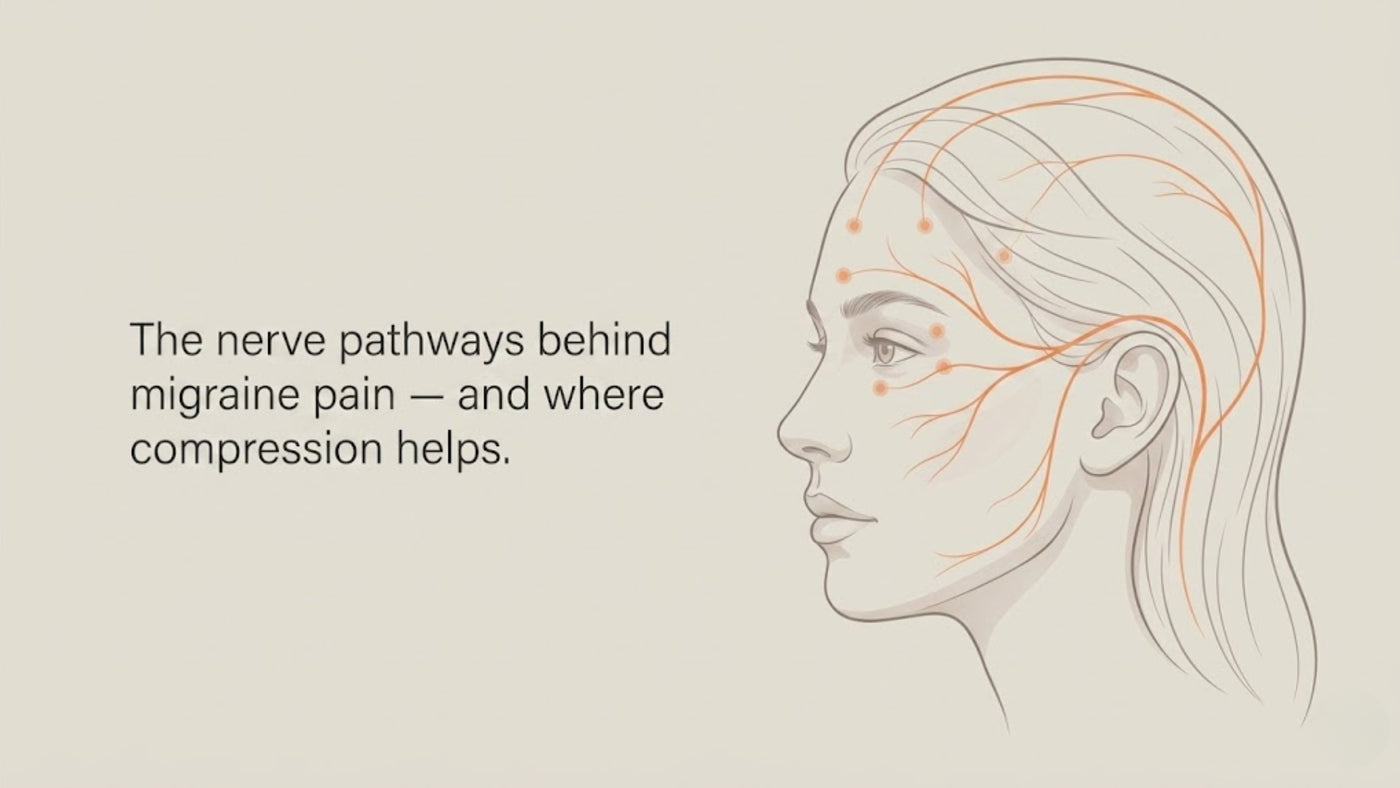
It's not a cure.
It doesn't prevent migraines.
It doesn't replace medication.
But for many women, used correctly and consistently, it shortens the attack, lowers peak pain intensity, and gives back hours from a day they'd otherwise lose.
This kind of intervention isn't new.
Migraine clinics in Germany have used variations of it for over a decade.
Japanese research groups have published on it.
The US has a handful of consumer devices that approach it from different angles.
The UK?
Almost nothing.
Not because the science is unsound.
Because there's no NHS pathway to prescribe it.
No British manufacturer producing it at a price women can actually afford.
And no GP training on it.
So British women keep waiting.
For specialist appointments.
For prophylactics to "kick in."
For a system that wasn't designed for chronic pain to suddenly decide their suffering is urgent.
And here I was — a GP, with all the access in the world — doing the same thing.
Why the NHS can't fix this (and why it isn't their fault)
Let me be very clear about something.
I love the NHS.
I've worked in it my entire career.
The people in it are working with what they have.
But here's the reality, and it's worth saying out loud:
The state of UK migraine care, today
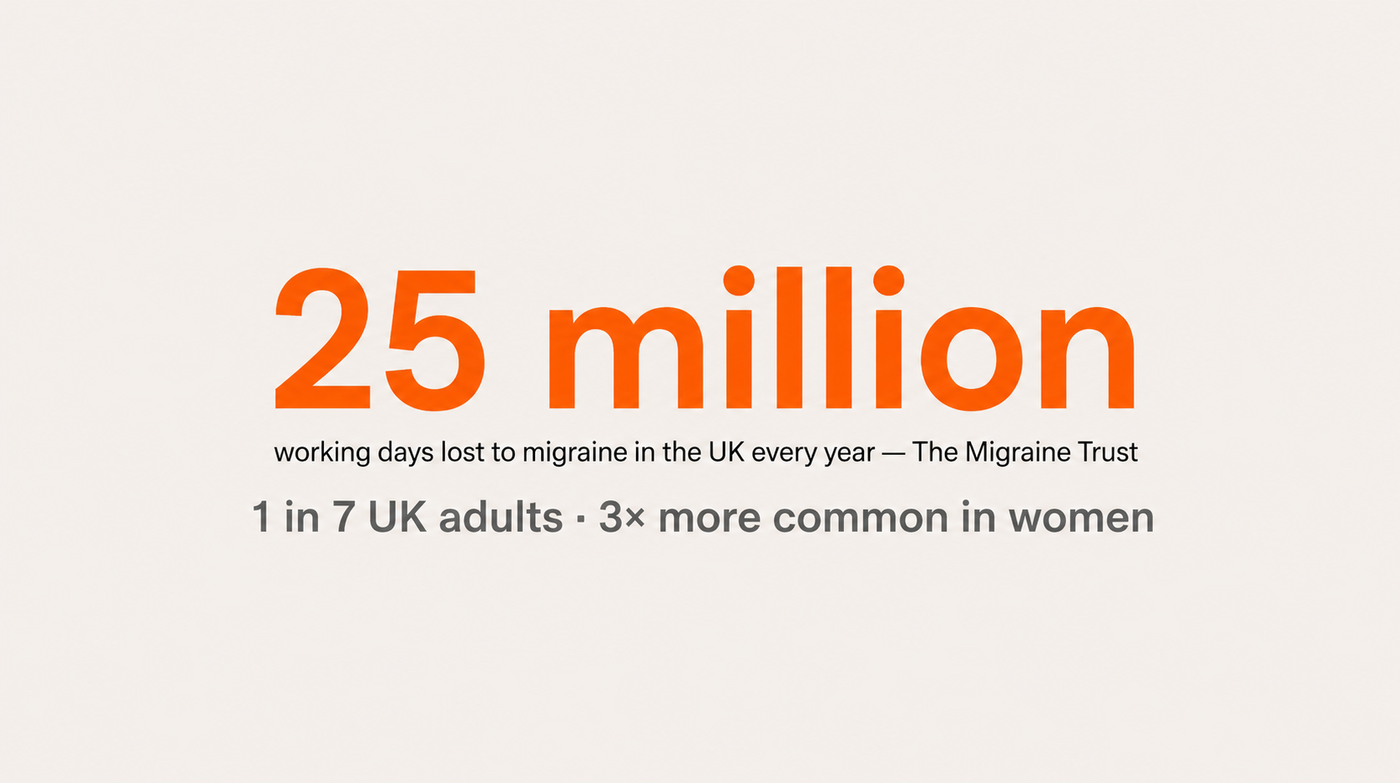
- Roughly 80 headache specialists in the entire UK, for an estimated 10 million migraine sufferers.
- Median wait to see one of those specialists: over 20 weeks. Some trusts push it past a year.
- NICE guidelines mean the path from first GP visit to "we've exhausted first-line options" can stretch to two or three years.
- During that time, you're expected to manage on paracetamol, ibuprofen, sumatriptan, and — if you're lucky — a prophylactic that may or may not work.
This isn't conspiracy.
It's structural reality.
The NHS was built around acute illness.
It struggles with chronic, episodic, invisible conditions.
And migraine is the textbook example.
The result?
Millions of British women lose days, weeks, sometimes years of their lives to migraine.
While the system slowly grinds toward giving them an answer that, in many cases, doesn't fully work anyway.
I'd spent nine months waiting.
I decided I was going to stop.
The first 15 minutes that changed my mind
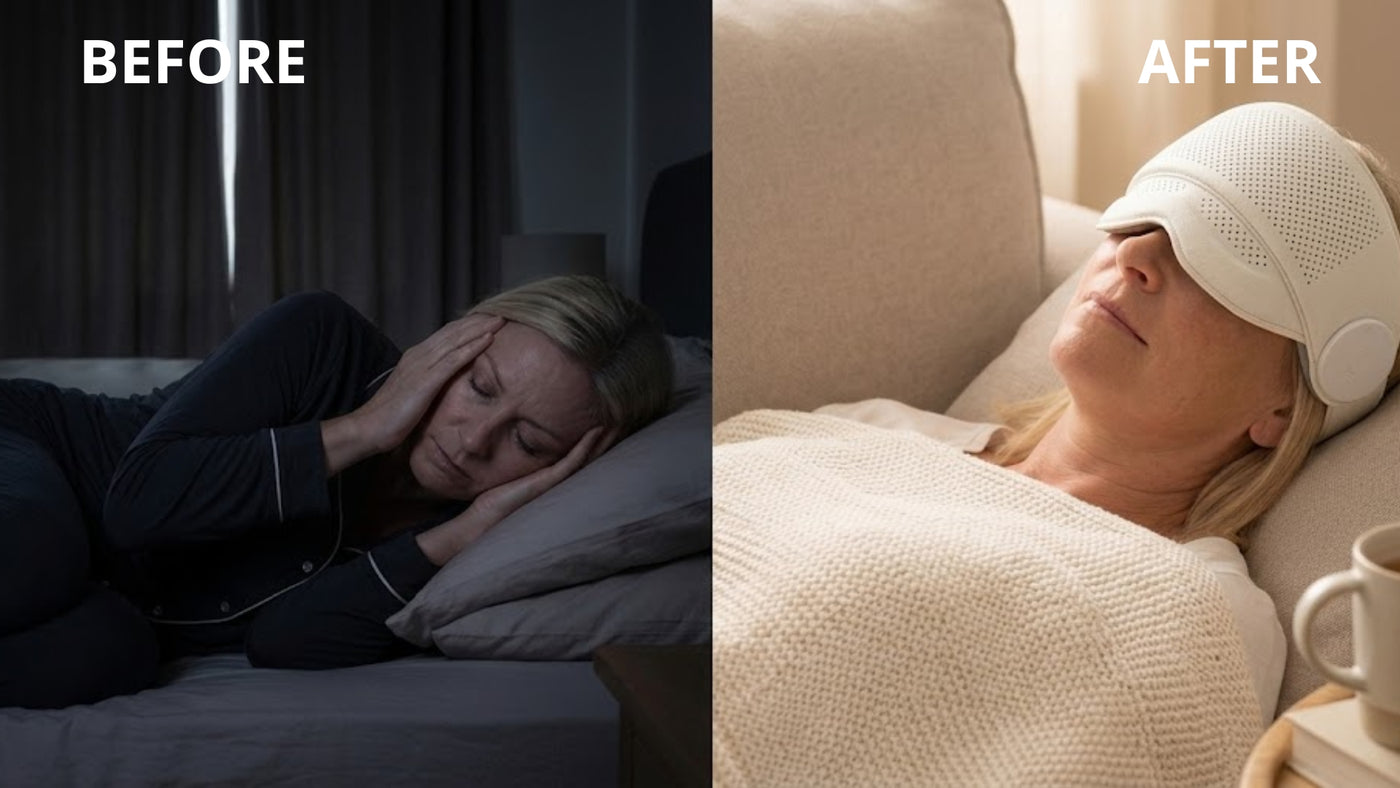
I started using a compression-based device I'd sourced through a contact in the Netherlands.
Nothing fancy.
An early version of the technology that's now commercially available.
I used it for the first time on a Sunday afternoon.
In the early stages of an attack.
Aura starting. The fog rolling in.
I lay back. I pressed the button. I closed my eyes.
For the first three or four minutes, nothing.
Then, gradually, something I hadn't felt in years during the prodrome phase:
The pressure behind my eye softened.
Not vanished. Not "miracle cure."
Softened.
The way pain softens when paracetamol finally kicks in.
Except this was happening within minutes, not hours.
"By minute twelve, I was crying again. For the first time in a long time, I felt like I had a tool. A small one. An imperfect one. But a real one."
That afternoon, I didn't lose the day.
I had a slightly difficult evening.
I went to bed early.
But I cooked my daughter's tea.
I helped with homework.
I read her a chapter of her book before she slept.
The next morning at the surgery, I looked at the long list of women on my patient roster waiting for the same neurology referral I'd been waiting for…
And I knew I had something to tell them.
What I now use with my own patients
Over the next eighteen months, I started recommending the same approach to my female patients with chronic migraine.
Particularly those with hormonal and perimenopausal patterns.
Where the NHS pathway is slowest and the medication options most frustrating.
I tried five different devices on the market.
Some were clinical-grade and cost over £300.
Some were Amazon white-label and barely worked.
None were designed with the UK woman specifically in mind.
Then I came across Solva.
A new UK-facing device built around the same compression-and-heat science I'd been reading about.
Designed to be used in 15-minute home sessions.
At a price point that didn't require remortgaging.
I trialled it personally for three months before recommending it to a single patient.
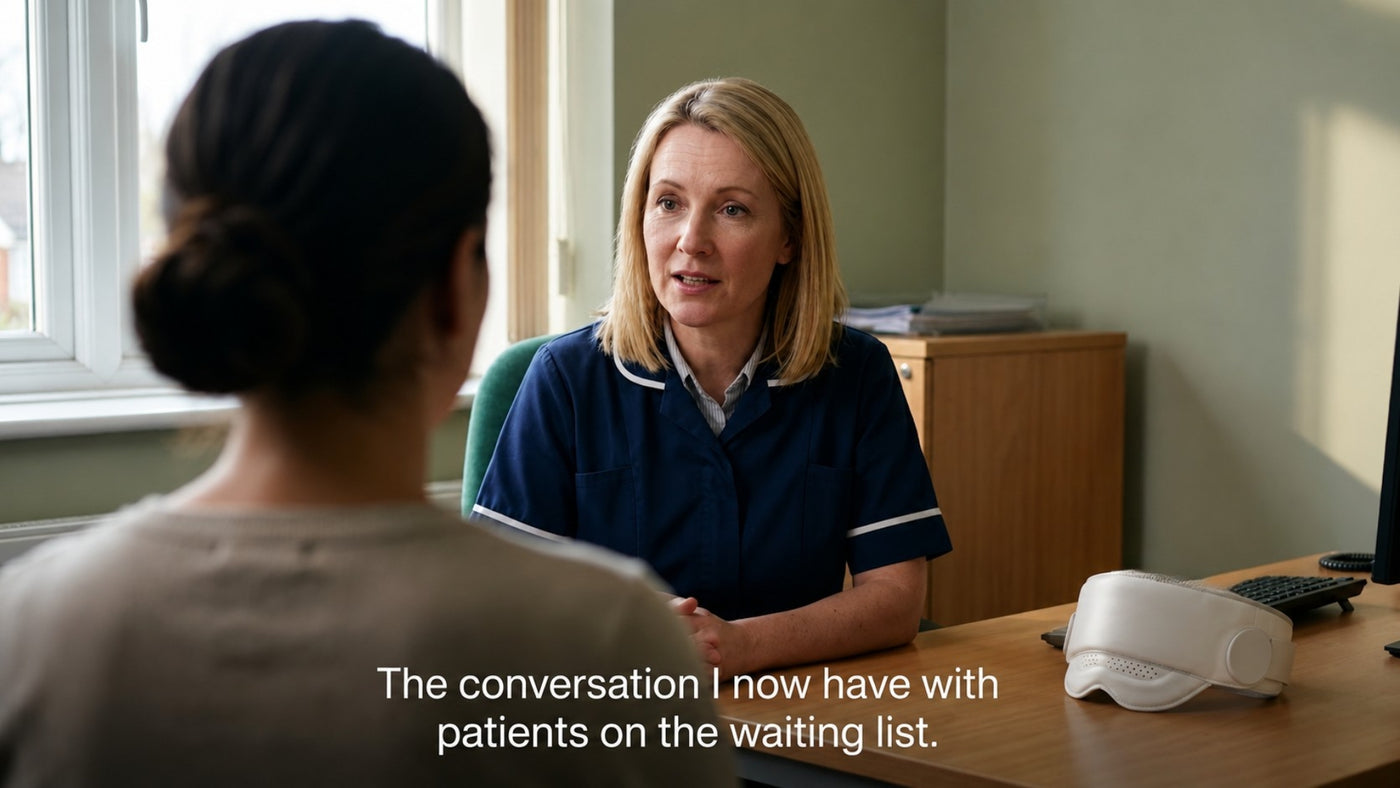
I now recommend it to women who fit a specific profile:
- They've been on the NHS pathway long enough to know it's slow.
- They've tried at least one or two medications and either had side effects or partial relief.
- They want a tool they can use at home, on their own terms, without another appointment.
- They want to keep working with their GP — not replace them.
That last point matters.
Solva isn't a replacement for medical care.
It's something you can do for yourself while the care you've been promised slowly catches up.
How Solva actually works
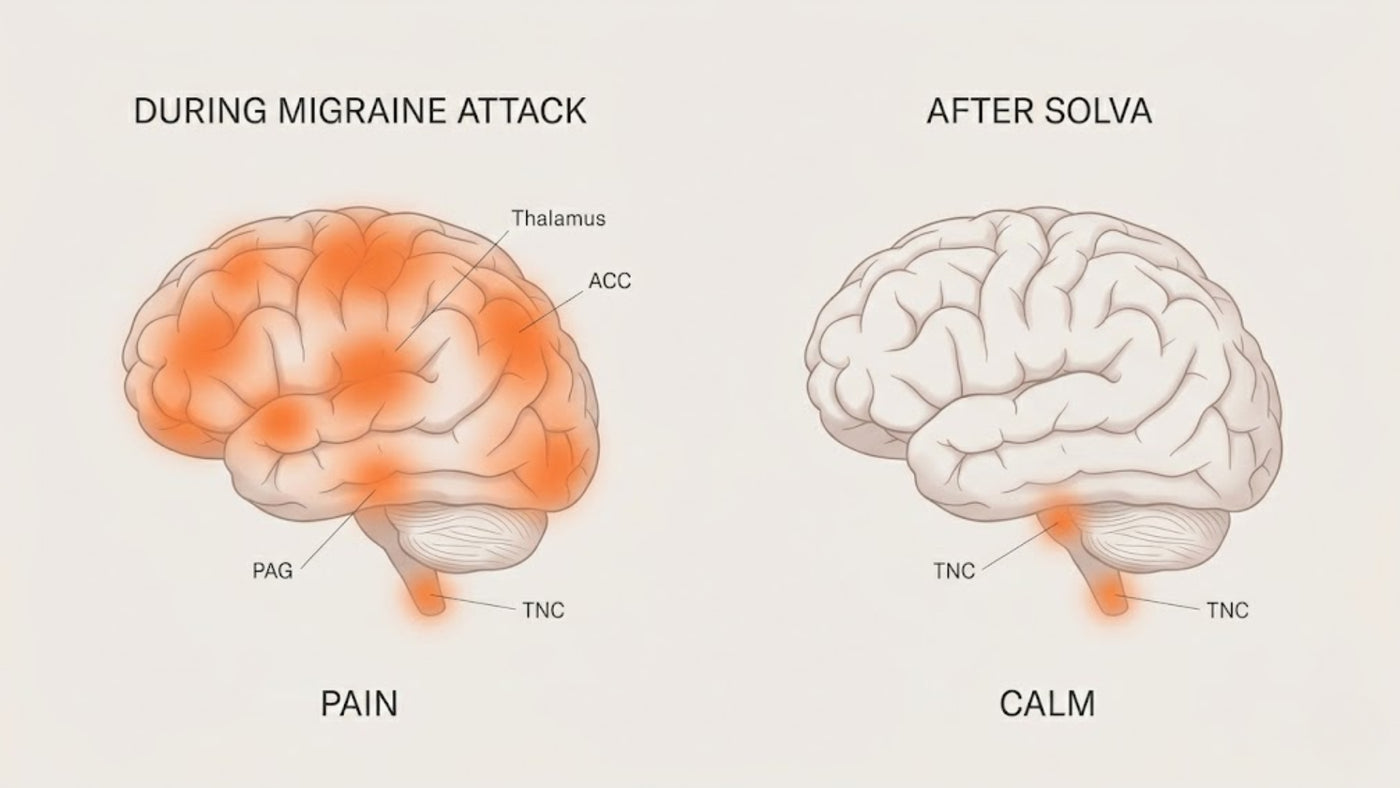
Three things happen during a 15-minute session.
1. Targeted compression
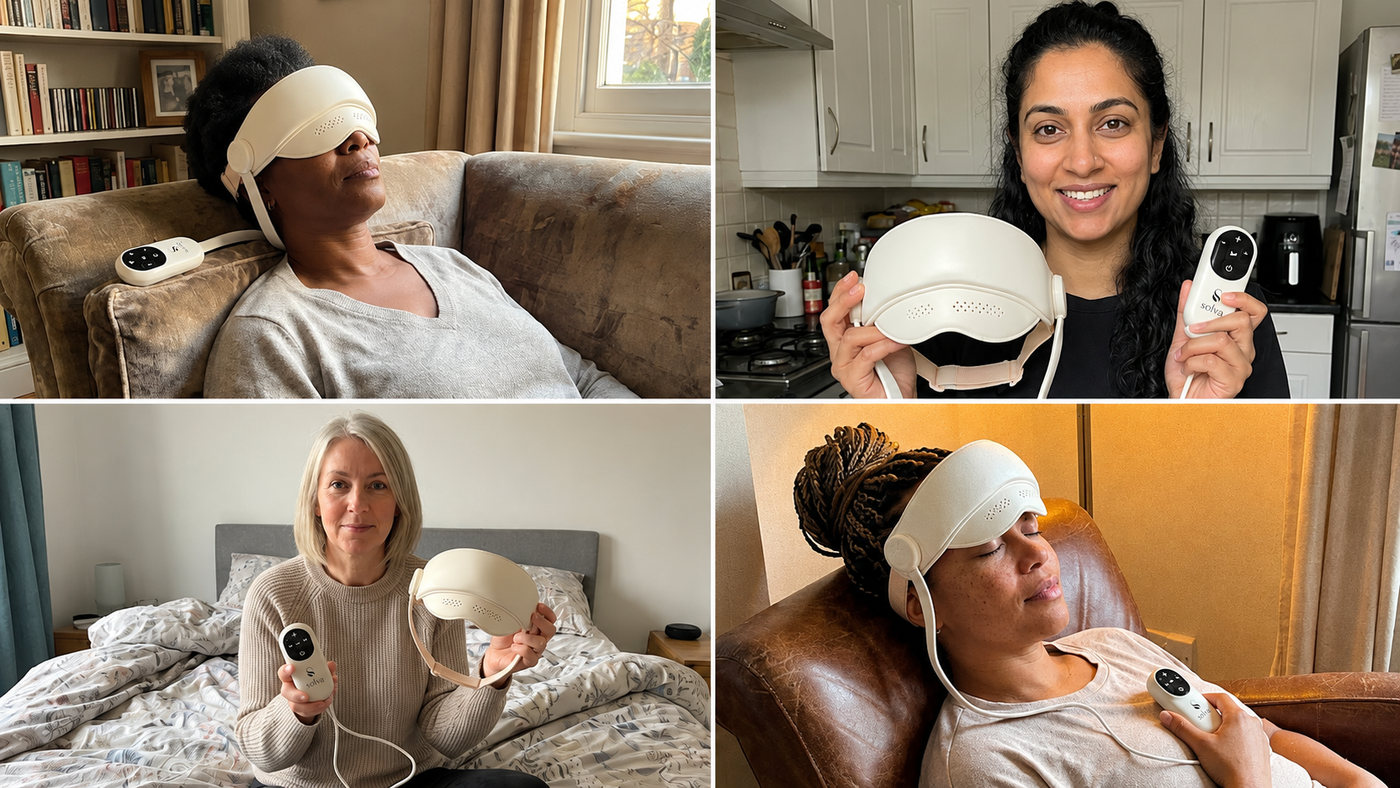
Six pneumatic airbags positioned over your temples, forehead and eye area.
Gentle, rhythmic pressure.
Calibrated to the points where pain-carrying nerves run closest to the surface.
Most women feel the pressure soften within the first five minutes.
2. Optional heat therapy
A soft, even heat — adjustable, never harsh.
Penetrates the muscle and surrounding tissue.
This is the layer most generic head massagers skip.
It's also the layer that, in my experience, makes the difference between "felt nice" and "actually helped."
3. A real 15-minute window
The device auto-shuts off at 15 minutes.
You don't have to time it.
You don't have to think about it.
You lie down. Press one button. Let the session run.
The lowest-friction tool I've ever recommended to a chronic pain patient.
It's drug-free.
There are no side effects in the way you'd think of side effects from medication.
Within the first two weeks of consistent use, most of my patients report:
- Migraine attacks that feel shorter than before.
- A lower peak pain intensity during the attack.
- A clearer recovery the day after — what's sometimes called the "migraine hangover" — feels less heavy.
- And, importantly: a feeling of agency they'd lost. Of having something to do in the moment, instead of waiting it out in the dark.
It doesn't work for every type of migraine.
It doesn't work for everyone.
But for the right woman — and there are a lot of right women out there — it changes the texture of the month.
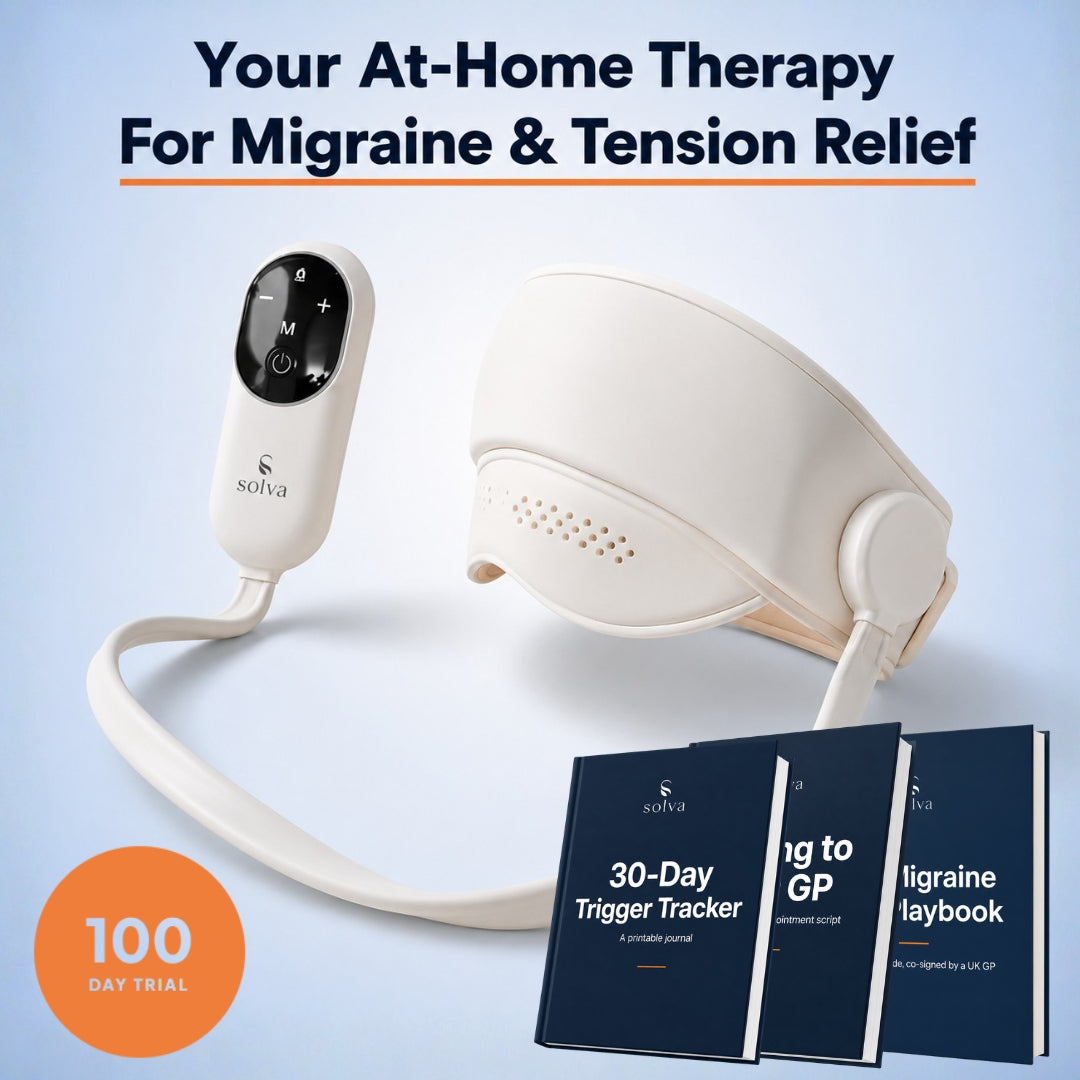
The 100-day promise
This is the part I respect most about Solva.
Most consumer health devices give you 30 days.
Some give you 60.
Solva gives you 100 days.
And the return is free.
Here's why that matters.
You can't really know if a migraine tool works in two weeks.
Migraines are cyclical.
You might have a quiet fortnight and miss the chance to use it.
You might have a bad fortnight and use it five times and not feel sure.
100 days gives you three full menstrual cycles.
It gives you a season change.
It gives you enough lived experience to actually know.
And if at the end of 100 days you don't feel a difference?
You return it. Free. No script. No questions.
I've never seen a consumer health device sit behind that long a guarantee unless the company genuinely expects most women to keep it.
What's included when you order today
I asked Solva what they were offering British women specifically.
Here's what comes in the box:
The Solva Starter Kit (£99)
- Solva Migraine Relief Device — full kit, ready to use out of the box
- The Migraine Day Playbook — a 25-page guide on what to do in the first 10 minutes, the next hour, and the rest of the day. Co-signed by a UK GP.
- Talking to Your GP: A Migraine Sufferer's Script — what to say in a 10-minute appointment to walk out with what you actually need.
- The 30-Day Trigger Tracker — a printable journal to spot the patterns your migraines follow.
- Free UK tracked delivery, 100-day trial, free returns.
Total value if bought separately: £217.
Right now: £99.
The honest truth about who Solva is for
I'm not going to tell you Solva will change your life.
I don't know your life.
I don't know your migraines.
But here's what I can say, as a GP and as a woman who's lived with this for over a decade:
If you're tired of waiting…
If you've tried two or three medications and they haven't quite worked…
If you're losing days every month and quietly grieving the version of your life that didn't include this…
If you want something to do the next time you feel the aura coming, instead of just lying still and hoping…
Then Solva is worth the 100-day trial.
"It won't replace your GP. It won't cure your migraines. But it might give you back a day this month. And then another the month after."
That's not a small thing.
That's the difference between watching your daughter's nativity play.
And watching the video later.
With warmth,
P.S. My daughter is eleven now. Last month I went to her end-of-year assembly. I sat in the second row. I didn't have to leave halfway through. That's not because Solva is magic — it's because I now have one more tool than I did before. Sometimes that's enough.
P.P.S. The 100-day return is free, fully tracked, and handled by Solva's UK support team. If it doesn't help, you've lost nothing but the courage to try. If it does help — and there's a good chance it will — you'll wonder why no one told you about it sooner.
Bought it for my mum (perimenopausal, terrible migraines since 47). She's been using it every morning as a kind of preventative ritual. She told me she didn't realise how much energy she'd been spending bracing for the next attack until she stopped.
GP here. I've been recommending Solva to chronic migraine patients in my practice for about four months. Anecdotal, but the feedback has been better than I expected, particularly for hormonal patterns. Worth a try if the NHS pathway feels stuck.
Question — does it actually work during an attack or only as prevention? I get such bad photophobia that I can't imagine wanting anything on my head when it hits.
Hi Charlotte — both. Many customers use it at the first sign of aura/prodrome to reduce attack severity, and many use it daily as a preventive ritual. The fabric is soft and the device sits gently over your eyes (light-blocking). You can absolutely use it in a dark room.
Reading this on day three of a migraine. Just ordered. The "school play I missed" line broke me a bit because that was me last Christmas.
Is it worth it if you only get migraines a few times a month? Or is this more for chronic sufferers?
Olivia — I have about 4 migraines a month and it's been useful. Especially the heat for the post-migraine recovery day. Worth a try given the 100-day return.
I can't wait to try it. I received it today!
For anyone wondering — mine arrived in 3 days, tracked the whole way. Easy to use out of the box, no app needed which I actually love. Used it twice so far. Cautiously optimistic.
Genuinely the first time I've read something about migraines that didn't feel like it was written by someone who's never had one. Thank you.
My granddaughter showed me this article. I'm 67 and have had migraines since my forties. I didn't think anything new would help at this point. Three weeks in and my husband says I look "less braced." That's the best way I can describe it.
Solva is a wellness device. It is not a medical device and is not intended to diagnose, treat or cure any medical condition. If you experience persistent or severe headaches, please consult your GP. Results vary by individual. Solva is sold direct-to-consumer in the United Kingdom only.
Honestly didn't think anything would help with my hormonal migraines anymore. Six weeks in and I've used my last triptan over a month ago. I'm not pain-free but I'm functional, which I haven't been in years.