The Knee-Pain Mistake Almost Everyone Over 50 Makes Without Realising
A UK physiotherapist on the everyday habit that quietly makes stiff, aching knees worse — and the simple, drug-free thing she suggests instead.
Most people don't notice the day their knee stops being reliable.
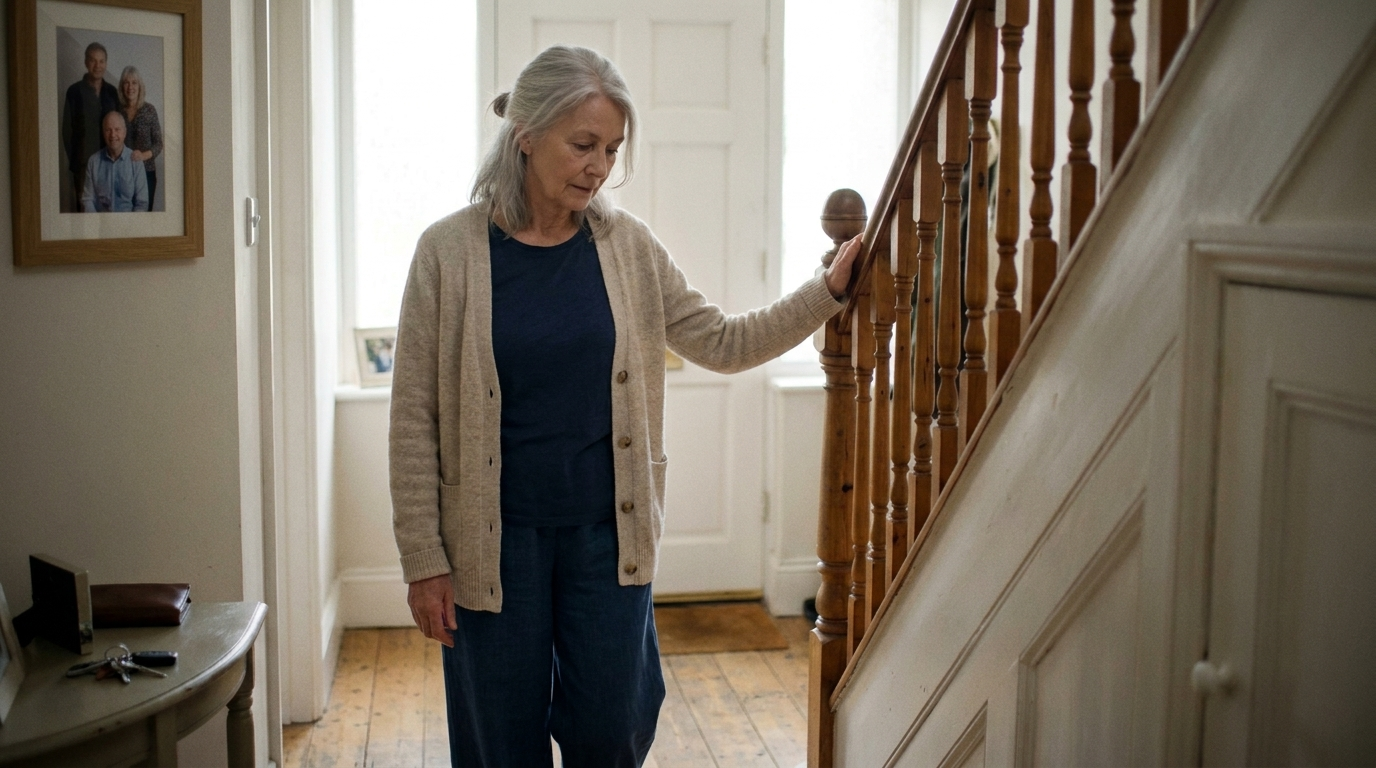
It's not a fall or an injury. It just creeps in. One morning you're a little stiff getting out of bed. A few months later, you're holding the bannister going downstairs. Then you find yourself planning your day around how far you'll have to walk.
If that sounds familiar, I want to tell you something I've told hundreds of patients in my clinic — because there's a very common mistake at the heart of it, and almost nobody realises they're making it.
It's not your fault. It's the most natural thing in the world to do. But it's quietly making things worse.
First, the mistake almost nobody spots
When a knee starts to ache, we do two sensible-sounding things: we rest it, and we reach for a painkiller.
And here's the part that surprises people: for a worn, stiff knee, that combination is often the worst thing for it.
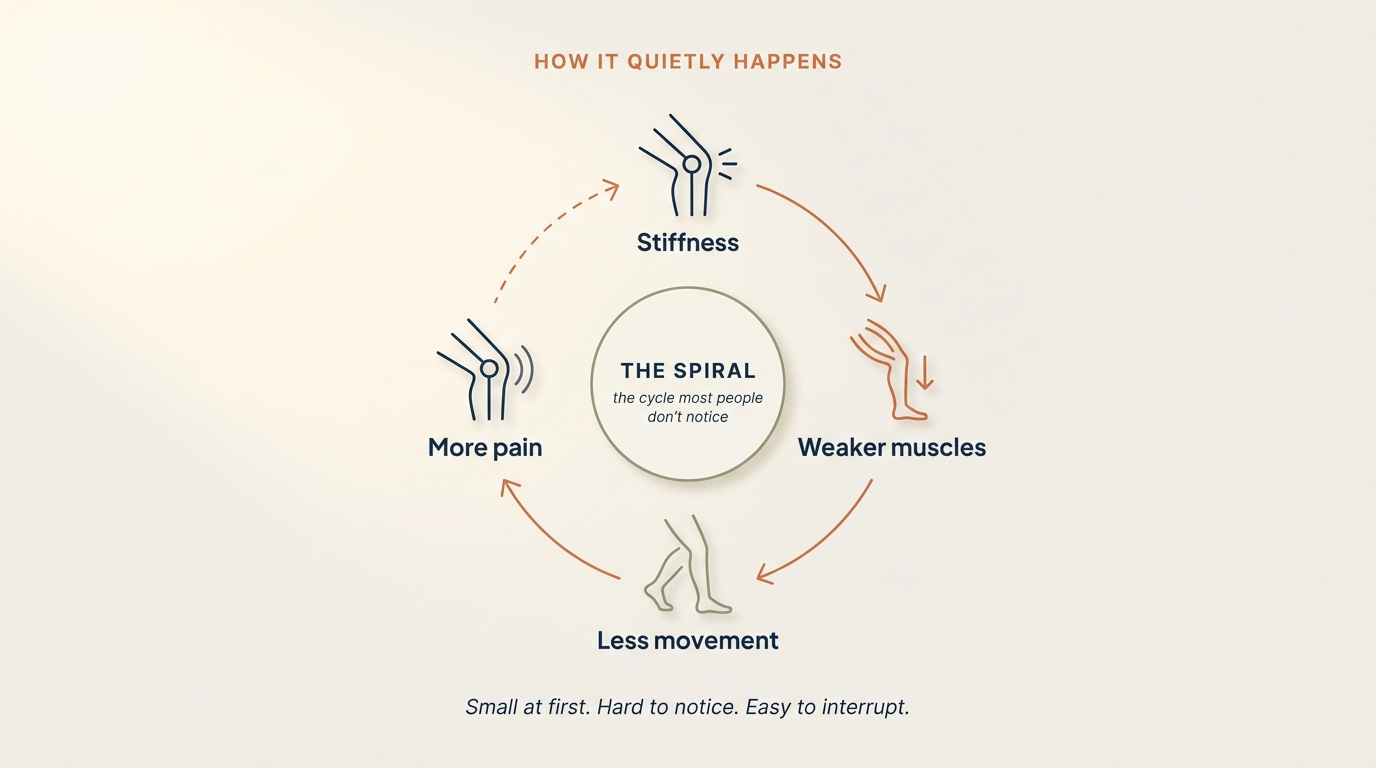
Rest feels kind. But a knee that stops moving stiffens up. And the muscles around it — the ones whose entire job is to support and protect that joint — start to weaken within weeks. So the joint ends up less protected than before, not more.
The painkiller, meanwhile, isn't fixing anything. It's turning down the volume on a warning light.
So the knee gets a little stiffer, the supporting muscles get a little weaker, you move a little less to avoid the pain… and round it goes. Most people don't feel themselves sliding down that spiral until they're a fair way down it.
Why the painkillers seem to stop pulling their weight
I hear this constantly: "They used to take the edge off. Now they barely touch it."
That's the spiral talking. Pills mask the pain, but they do nothing for the stiffness or the weakening underneath. So you need them more often, for less relief — and you're left worrying about what all those tablets are doing to your stomach and your kidneys.
It's a frustrating place to be. But it points us straight at what actually helps.
What a worn knee actually needs
The knees that cope best, in my experience, aren't the ones that are rested and medicated. They're the ones that keep moving — gently, and with support.
Movement keeps the joint from seizing up and keeps those supporting muscles awake. Support shares the load, so the joint isn't taking every step on its own.
"But that's the catch," people say. "Moving is exactly what hurts."
Quite right. And that's the bit most people get stuck on. If movement hurts, you avoid it — and you're back on the spiral. What you need is a way to make moving comfortable enough that you actually keep doing it.
A different idea: three zones, not one
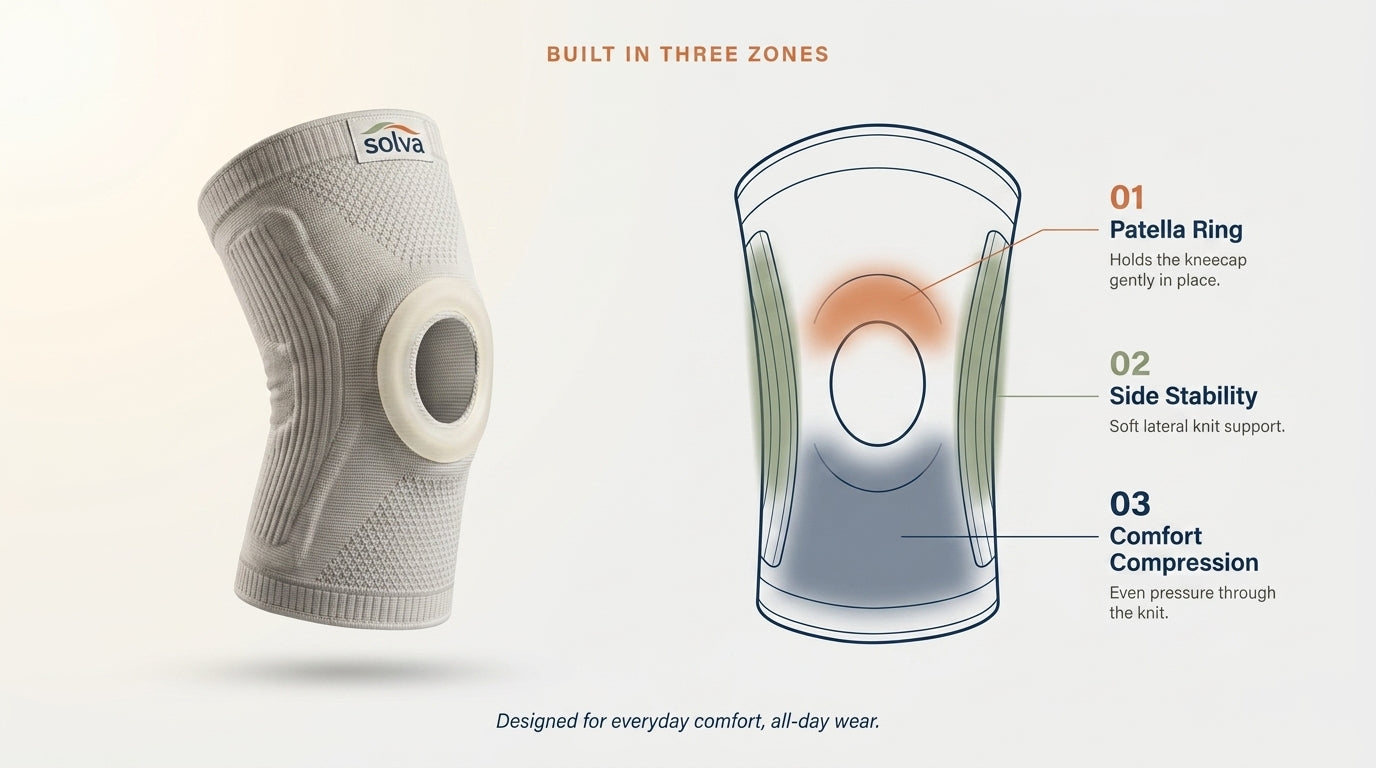
That gap is exactly what the solva 3-Zone Knee Support™ was built to fill. It's the one I now point people towards, and the idea behind it is simple: a single layer of fabric was never going to hold a worn knee, so it works in three zones at once.
Together they do the thing that matters: they make moving comfortable enough that you keep doing it. You slip it on like a sock, wear it under your trousers, and get on with your day. No straps to wrestle, no buttons, no fuss.
Now, let me be straight with you
You've probably seen the adverts that promise a sleeve will "rebuild your cartilage" or "make surgery disappear." I'm a physiotherapist, so I'll be honest: a fabric support doesn't do any of that, and you should be wary of anyone who says it does.
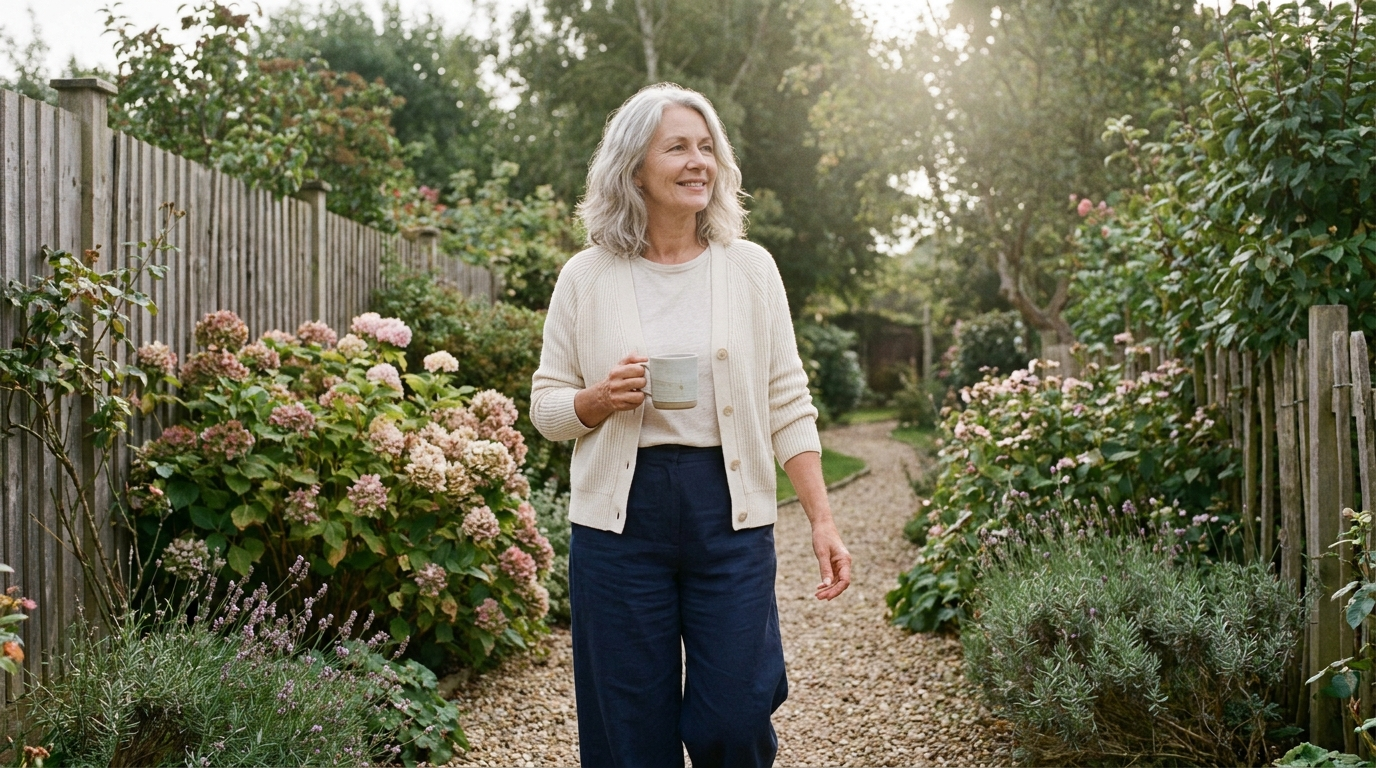
What a good support does do is take some of the load off the joint, steady it, and make everyday movement more comfortable — so you can stay active, hold on to your strength, and keep doing the things you'd quietly started giving up. For a great many people, that's the difference between a good day and a bad one.
That's all it claims to be. In my view, that's plenty.
The questions I get asked most
Most people notice the support the moment they put it on — that held, steadier feeling. The bigger benefit, staying mobile and keeping your strength up, comes from wearing it regularly and keeping gently active over the following days and weeks.
Yes. It comes in seven sizes, S through 4XL, and the knit is made to move with your shape rather than roll down or pinch. If the size you choose isn't quite right, the Perfect Fit Guarantee means they'll swap it, free.
A support won't change what's happening inside the joint, and you should always follow your surgeon's advice. That said, plenty of people use one to stay more comfortable and mobile during the long wait for a knee replacement — and going into an operation with stronger, more active legs is rarely a bad thing.
That's the idea. It's light and breathable enough for all-day wear, slim enough to sit under trousers unnoticed, and many people find it comfortable enough to keep on around the house and even in bed.
It's a simple fabric support — no medication, no electronics. Most people can wear one happily. If you have circulation problems, diabetes, or any concern about compression, do have a quick word with your GP first.
What comes with it
-
Three free guides to keep — The Knee-Friendly Movement Guide (the gentle daily exercises I'd start a patient on), Easier Days on the List (staying comfortable while you wait for surgery), and Eating for Comfortable Joints — worth over £27, yours free.
-
A 90-day risk-free trial — wear it for three months; if it isn't for you, let us know and you get a full refund.
-
The Perfect Fit Guarantee — wrong size, they'll swap it, no quibble.
-
Free tracked delivery to your door.
-
A real UK support team on a freephone line, seven days a week.
If you'd like to try it
The single support is good value at the moment, and there are better-value options if you'd like one for each knee, or a spare. There's no pressure — the 90-day trial means you can try it at home and decide in your own time.
Stock does come and go, so if it's something you've been meaning to sort out, it's worth not leaving it too long.
See sizes & prices ›What people are saying
"I noticed the difference most when going upstairs in the morning. My knees used to feel stiff after sitting for a while, but now I feel much more comfortable moving around the house and doing little jobs in the garden. It's become part of my daily routine."
"I was looking for something lightweight and easy to wear throughout the day. I've found it helps me stay more confident with my movement, especially when I'm out shopping or walking into town. Very comfortable and simple to use."
"What I like most is that I can wear it daily without it getting in the way. I even keep it on while relaxing in the evening. It feels supportive without being bulky, and I've been sleeping more comfortably too."

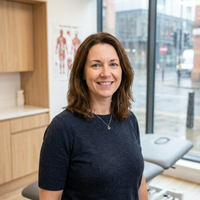
Claire Morgan is a UK-qualified physiotherapist (MCSP) with over 12 years of clinical experience in musculoskeletal care and mobility support. She currently practises in Manchester.